
"coffee cultivation systems"
4000 article(s) found

A brief introduction to the cultivation of Kenyan coffee beans with high standard quality control, climate and altitude
People in the coffee industry all think that Kenyan coffee is one of its favorite products because Kenyan coffee contains every feeling we want from a good cup of coffee. It has wonderful and satisfying aromas, well-balanced acidity, well-proportioned particles and excellent fruit flavors. The taste is so unique that there is almost no similar coffee. The characteristics of Kenyan coffee

Introduction to the origin and characteristics of Kenyan coffee
Ethiopia, the origin of Arabica coffee trees in the north of Kenya, was not engaged in coffee cultivation until the beginning of the 20th century. Missionaries introduced Arabica trees from the leaves in the 19th century, but did not plant them in large quantities until 1893. Brazil's ancient bourbon coffee seeds were introduced and coffee was cultivated on a large scale in Kenya. There are two types of coffee farms in Kenya, one covering an area of five acres.

Knowledge of Coffee Variety Classification
Special classification system of coffee: 1. Subgenus Coffea: 2. Malagasy coffee subgenus: 3. Subgenus Pala Coffee: 4. Age coffee subgenus: a, red coffee group: B, thick-skinned coffee group: C, Mozambican coffee group: d, black fruit coffee group E, dwarf coffee group: red fruit coffee group: a) Arabica species: Tibica varieties: (Tp)

A brief introduction to the description of the flavor, taste and aroma characteristics of boutique coffee beans in Berman Manor
The climate is located in the tropical monsoon area, most areas belong to the savanna climate, the coastal areas are hot and humid, and the plateau climate is mild. The rainy season is from March to June and from October to December, and the rest is dry season. The annual rainfall decreases from 1500 mm to 200mm from southwest to northeast. Nairobi, the capital, has a mild climate, with an average annual temperature of 17.7C and an annual rainfall of 1049 mm. Don't underestimate the small farmers in Kenya. They are the same.

Introduction of Kenyan Fine Coffee Kenny
Some buyers, especially Japanese businessmen, have expressed dissatisfaction with the Kenyan coffee industry system. Some businessmen say that the quality of coffee in the country has declined, and point out that buying directly from farmers may be a way to improve the quality. But in any case, Kenya's detailed rules and regulations and sound procedures are a model for all coffee producing countries to learn from.

Introduction of Indonesian Fine Coffee Muscat Coffee Bean Kopi Luwak Flavor taste Manor
Coconut cats are omnivores. In addition to eating seeds, they also eat insects, snakes, birds, amphibians and reptiles, so the feces discharged by really wild coconut cats will be mixed with all kinds of substances. Local farmers in Indonesia catch coconut cats to raise them and feed coffee beans to make them. But after all, there are some differences between artificial cultivation and natural ones. Civet coffee

Introduction to the characteristics of the taste-rich Kenyan boutique coffee bean flavor manor
Don't underestimate the small farmers in Kenya, they are just like ants, and their overall production capacity is higher than that of large farms, about six to four, which is quite rare in bean-producing countries. Kenyan coffee is widely appreciated by connoisseurs, thanks in large part to small farmers guarding the foothills in order to grow high-quality coffee. In addition, Kenya beans must have a strict grading system, and the coffee beans taken out by the washing plant are large.

A bean fragrance floats in the boutique market
Looking at the coffee beans with a bumper harvest and the newly processed coffee beans, our reporter Shen Haowen / Tu in the recent charm Yunnan World sharing Global Promotion held by the Ministry of Foreign Affairs, Yunnan coffee smelled in the blue hall, attracting the world's attention. Foreign Minister Wang Yi highly praised Yunnan coffee: it is the best coffee that I have traveled all over the world and drank from various countries in the world. Coffee cultivation in Yunnan

Ethiopia: Arabica's genetic Treasure House
Following Ka Pai (Wechat official account vdailycom) found that the Beautiful Cafe opened a small shop of its own, the Federal Democratic Republic of Ethiopia (English: The Federal Democratic Republic of Ethiopia), abbreviated as Ethiopia or Ethiopia, a country located in northeast Africa. It is bordered by Djibouti and Somalia in the east and Sudan in the west.
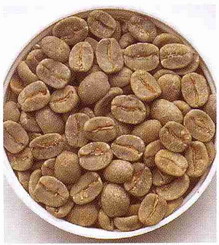
Coffee beans knowledge points: Specialty Coffee concept (III)
Specialty Coffee is evaluated and graded by national specialty coffee associations (such as SCAA and SCAJ). There is no clear and uniform definition. It changes and evolves every year. The current standards are roughly as follows: 1. Does it have rich dry aroma (Fragrance): refers to the aroma of roasted coffee, or roasted beans

How about coffee at Berman Manor in Kenya? how many flavors are there in Berman Manor coffee beans?
Professional barista exchanges please follow the coffee workshop (Wechat official account cafe_style) Kenya Berman Manor single coffee how many kinds of flavor Kenya north neighbor Arabica coffee tree origin Ethiopia, but not until the beginning of the 20th century, began to engage in coffee cultivation, the 19th century missionaries introduced Arabica trees from Yemen, but not

A brief introduction to the treatment method of grinding degree and baking degree of fine coffee beans in Berman Manor with citrus fruit aroma.
Located in the tropical monsoon area, most areas belong to the savanna climate, the coastal areas are hot and humid, and the plateau climate is mild. The rainy season is from March to June and from October to December, and the rest is dry season. The annual rainfall decreases from 1500 mm to 200mm from southwest to northeast. Nairobi, the capital, has a mild climate, with an average annual temperature of 17.7C and an annual rainfall of 1049 mm. Don't underestimate the small farmers in Kenya. They are no less than ant soldiers.

The United States assists Myanmar in establishing a boutique coffee growing system. Burmese coffee enters the US market.
Among all the coffee producing countries in Southeast Asia, it is undeniable that the frenzy about coffee in Myanmar (Myanmar) is already very obvious. Surprisingly, the first export to the American specialty coffee market began in 2016. This is an ancient and truly fascinating country, and its recent history is puzzling. The Burmese government and military are accepting information about the Rohingya in Rakhine State in western Myanmar.

Costa Rica three miracle manor F1 sun hand brewed coffee good to drink-three miracle manor coffee features
Professional coffee knowledge exchange More coffee bean information Please pay attention to Coffee Workshop (Weixin Official Accounts cafe_style) Costa Rica Finca Tres Milagros In the fine coffee circle, as long as Camilo, the owner of Santo Ario Manor, is mentioned, most people agree that due to his extraordinary enthusiasm for coffee cultivation and innovative experiments

Introduction of Ethiopian Coffee Culture, Coffee Climate cultivation in Ethiopia
Following Kaiping (official Wechat account vdailycom) found that Beautiful Cafe opened a small shop of its own in Ethiopia, which is located between 3 and 14 degrees north latitude, with coffee trees covering an area of nearly 600000 hectares. There are two rainy seasons a year in the south and east of the country, while there is only one rainy season in the west. The distribution of the rainy season is different, so coffee is harvested in Ethiopia all the year round. Coffee grows.

Ethiopia Yega Xuefei 90 + Hachilla Coffee Bean N2 Information introduction _ Hachila Coffee Price report
Professional coffee knowledge exchange more coffee bean information please follow the coffee workshop (Wechat official account cafe_style) Joseph Brodsky officially founded Ninety plus in 2007, and since the next year, we can see traces of Ninety plus winning awards in large and small coffee competitions around the world, such as the 2013 WBC World baristas Competition, six finalists

The characteristics of coffee in Berman Manor in Kenya introduction to the types of coffee in Berman Manor
For the exchange of professional baristas, please pay attention to the coffee workshop (Wechat official account cafe_style) the characteristics of coffee in Burman Manor in Kenya. The type of coffee in Berman Manor in Kenya is Kenya. Kenya Kenya is adjacent to the origin of Arabica coffee trees in Ethiopia, but it was not until the beginning of the 20th century that it began to engage in coffee cultivation. Missionaries introduced Allah from Yemen in the 19th century.

What are the varieties of boutique coffee beans? Knowledge of flavor characteristics in the process of coffee bean grading system
In plant taxonomy, coffee belongs to the GenusCoffea family of Rubiaceae, and there are at least a hundred varieties of coffee under it. The more common coffee are Arabica (Arabica, elegant flavor, is the main boutique coffee) and Robusta (or sturdy beans)

The processing method of Yunnan Tieka Coffee beans description of Flavor of varieties produced by Grinding scale
Yunnan Tieka coffee bean processing method grinding scale variety flavor description of the variety, also known as the old variety of small-grain coffee, its yield is less, cultivation is difficult, so the price is much higher than ordinary small-grain coffee. Tibica coffee, native to Ethiopia and southeastern Sudan, is the most widely cultivated variety of coffee in the Western Hemisphere. The plants are strong, but not light-resistant, in Hawaii.

Introduction to Coffee Bean producing area in Kenya: AA characteristics, Flavor description, Taste Manor
Kenya coffee bean producing area AA characteristic practice flavor description taste manor introduces them to be no different from ant male soldiers, the overall production capacity is higher than that of large farms, about six to four, which is quite rare in bean-producing countries. Kenyan coffee is widely appreciated by connoisseurs, thanks in large part to small farmers guarding the foothills and producing high-quality coffee. In addition, Kenyan beans must have a strict grading system, which is taken out by the washing plant.